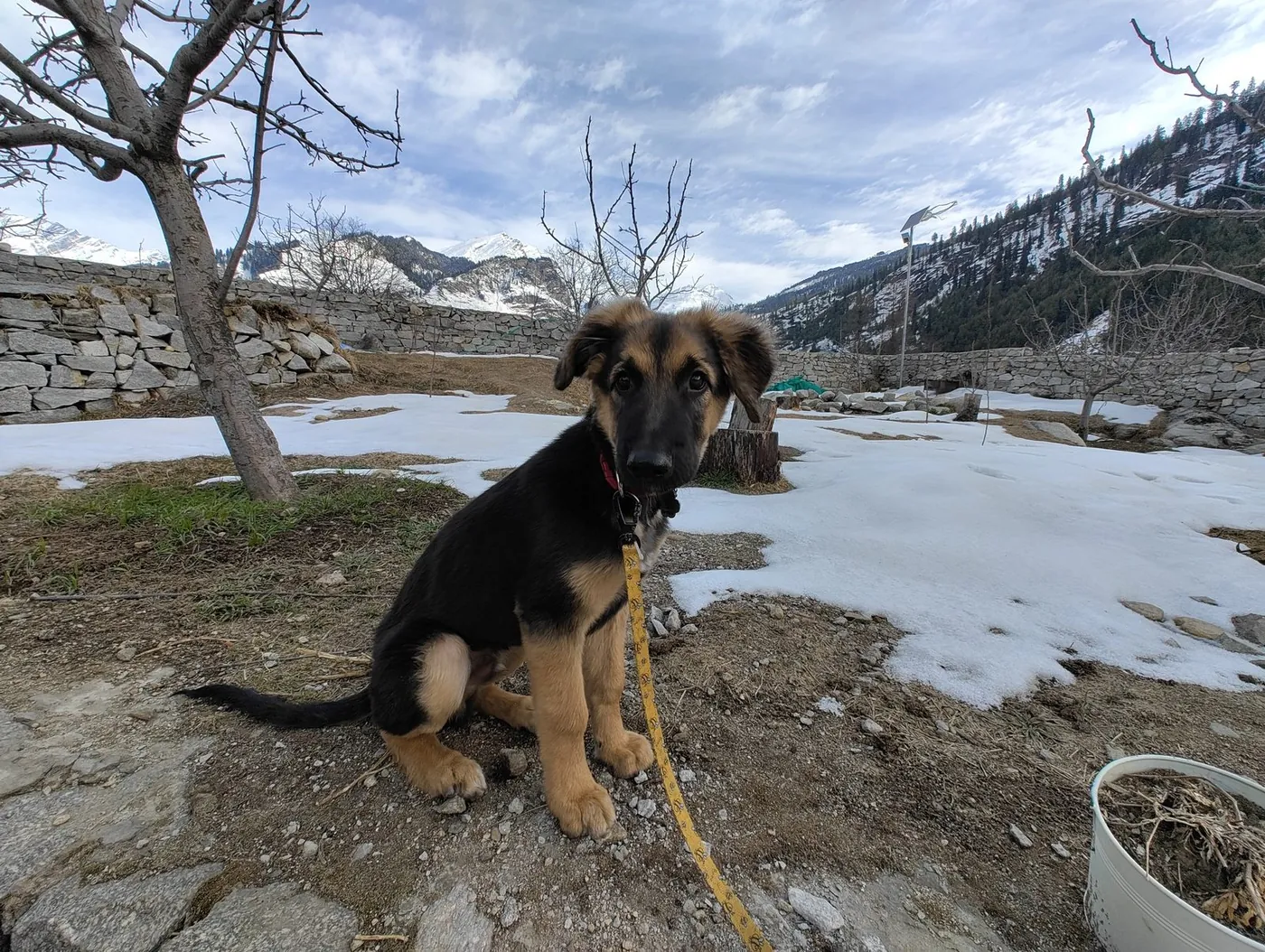
A dog can be wonderful at home and still not be ready for a road trip.

That does not mean your dog is bad. It means travel asks for a different set of skills.

At home, your dog knows the smells, sounds, corners, routines, exits, people, and rules. On a road trip, everything changes. The car moves. The road gets noisy. The food routine shifts. Breaks happen near traffic. The stay may have unknown staff, other dogs, strays, slippery floors, unfenced lawns, open gates, and humans who think every dog wants to be touched.

That is a lot for a dog to process.

So the question is not, “Is my dog obedient?”

The better question is:

Can my dog stay safe, recover, and listen when the environment changes?

That is what travel readiness really means.

Road trips with dogs are not just about packing the car

Most dog parents start with the visible checklist.

Harness. Leash. Food. Bowls. Water. Towels. Bedding. Poop bags. Favourite toy. Vet record. Tick protection. Car seat cover.

All of that matters.

But the harder checklist is behavioural.

Can your dog manage the car? Can they rest between exciting moments? Can they walk past a stranger without lunging? Can they pee in an unfamiliar place? Can they cope when a caretaker appears suddenly near the cottage? Can they recover after barking at a dog near the gate?

This is where many first trips become stressful.

Not because the parent did not care. Usually, they cared a lot. They packed half the house. Classic dog-parent behaviour. Five bags for the dog, one toothbrush for the human.

The problem is that travel does not test how much you love your dog. It tests how prepared the dog-parent pair is.

The real question: can your dog recover when the plan changes?

A travel-ready dog is not a perfect dog.

A travel-ready dog may still get excited. They may bark once. They may need space. They may need time to settle in a new room. They may not love every stranger, every dog, or every café.

That is normal.

The real marker is recovery.

If your dog gets startled, can they come back to you?

If the car stops at a noisy fuel station, can they stay safely managed?

If another dog appears at the property gate, can you create distance without a full meltdown?

If the room smells strange, can your dog eventually rest?

Travel readiness is not about creating a robot dog. It is about building enough skills, management, and parent confidence that one difficult moment does not collapse the whole trip.

Signs your dog may be ready for a short road trip

Start small. A dog who is ready for a two-hour test trip is not automatically ready for a 10-hour hill drive, a wedding stay, or a chaotic resort weekend.

Here are signs your dog may be ready for a short, planned road trip.

Your dog can settle in the car

Your dog does not have to love the car immediately. But they should be able to stay reasonably safe and contained.

Good signs:

  • They can enter and exit the car without panic.
  • They can stay in their assigned space.
  • They are not constantly trying to climb into the driver’s lap.
  • They are not barking at every two-wheeler, toll booth, or person outside.
  • They can rest for part of the drive.
  • They recover after turns, stops, or brief excitement.

Watch the difference between excitement and distress.

A dog looking out of the window and then resting is different from a dog panting heavily, drooling, whining, trembling, vomiting repeatedly, or trying to escape. One is stimulation. The other may be stress, motion sickness, or both.

Your dog can take breaks without losing control

Breaks are where many trips unravel.

On Indian roads, breaks may happen near dhabas, fuel stations, toll plazas, village roads, highways, open fields, stray dogs, cattle, children, and people who want to say, “Doggy bite nahi karega na?”

Your dog does not need to greet everyone. In fact, they should not.

But they do need to be manageable.

A ready-for-trial-trip dog can usually:

  • Get out of the car calmly enough to stay safe.
  • Walk on leash without dragging the parent into traffic.
  • Pee or sniff without panicking.
  • Return to the car without a wrestling match.
  • Ignore or move away from people and dogs when guided.

If every break becomes a full-body sport, the dog may need more preparation before a longer route.

Your dog can eat, drink, pee, and rest outside home

This sounds basic. It is not.

Many dogs who seem confident at home struggle to do normal body functions while travelling. They may refuse water, hold pee for too long, skip meals, or stay alert for hours in a new room.

That is information.

It tells you the dog is not yet relaxed enough to function normally.

For a first short trip, look for small signs of comfort:

  • Your dog drinks water outside home.
  • Your dog can pee in an unfamiliar place.
  • Your dog can take treats or food after the first excitement settles.
  • Your dog can lie down somewhere other than your house.
  • Your dog can sleep, even lightly, after arrival.

A dog who cannot rest is not being “stubborn.” Their nervous system may still be on duty.

Your dog can handle new people, dogs, and sounds at a distance

Travel brings surprise.

Caretakers, housekeeping staff, other guests, children, dogs, cats, strays, cattle, temple bells, generators, pressure cookers, room service knocks, luggage trolleys, and someone’s uncle who insists he has “handled dogs since childhood.”

Your dog does not need to like all of this.

But they need enough distance tolerance.

For example:

  • Can your dog watch a person from 10 feet away without lunging?
  • Can they pass another dog across the road if you create space?
  • Can they hear a sudden sound and recover?
  • Can they be guided away instead of escalating?

If the answer is no, travel is still possible one day, but not by throwing them directly into a busy resort and hoping for personality development. That plan has strong “let’s see what happens” energy. The dog deserves better.

You can read your dog before things go wrong

This is the parent side of travel readiness.

A dog-parent pair is ready when the parent can notice early signals.

Not just barking. Earlier than barking.

Things like:

  • Sudden stillness
  • Hard staring
  • Refusing treats
  • Lip licking
  • Turning away
  • Whale eye
  • Pacing
  • Panting when it is not hot
  • Scanning the environment
  • Pulling toward the exit
  • Hiding behind the parent
  • Sniffing frantically without relaxing

The goal is not to become paranoid. It is to catch discomfort early enough that you can help the dog before they have to shout.

Signs your dog may need more preparation first

Pause before planning a road trip if your dog:

  • Panics in the car or vomits repeatedly.
  • Cannot be safely restrained in the car.
  • Lunges strongly at people, dogs, two-wheelers, or cattle.
  • Cannot settle outside home even after enough time.
  • Refuses water for long periods when outside.
  • Gets defensive when strangers approach.
  • Has no reliable way to move away with you.
  • Pulls so hard that you cannot safely manage them near traffic.
  • Has bitten, snapped, or redirected in stressful environments.
  • Recovers very slowly after triggers.
  • Needs the parent to constantly hold, block, or physically control them.

This is not a moral judgment. It is a safety call.

Travel can be built. But it should be built step by step.

Why “good at home” does not always mean “travel-ready”

Home behaviour is not enough data.

A dog may know sit, stay, come, and paw at home. Lovely. Gold star. Still not the same as walking through a new property where a stray dog is barking behind a gate and a staff member is carrying a tray of food.

Travel adds:

  • Movement
  • Heat
  • Traffic
  • New smells
  • New surfaces
  • Unfamiliar sleeping spaces
  • Unpredictable people
  • Other animals
  • Parent stress
  • Routine disruption

Many dogs do not fail because they lack intelligence. They struggle because the environment is too much, too soon.

This is why “we will manage somehow” is not a plan. It is hope wearing sunglasses.

What to try before your first real trip

Before booking a stay, create a small test ladder.

Start with one change at a time.

Try:

  • A calm 10-minute car session without going anywhere exciting.
  • A short drive to a quiet lane and back.
  • A water break outside home.
  • Sitting with your dog in the parked car while people pass at a distance.
  • A short visit to a quiet friend’s house or building compound.
  • A 30-minute outing where the goal is only settling, not walking five kilometres.
  • A half-day trip before an overnight stay.
  • A one-night stay before a three-night holiday.

Do not use the first big trip as the test.

Test before the trip. Not during the trip. During the trip, the meter is already running and everyone is tired.

When to consider dog travel training

Consider dog travel training if you want to travel with your dog but you are not sure how to bridge the gap between home and the road.

It may help if:

  • Your dog is not calm in the car.
  • Your dog is reactive to people, dogs, or movement.
  • You feel nervous managing your dog outside familiar places.
  • Previous trips were stressful.
  • You want to travel but keep postponing because “what if something goes wrong?”
  • Your dog is young and you want to build travel skills correctly.
  • Your dog is older and needs gentler preparation.
  • You have a specific trip coming up and want a realistic readiness check.

A good travel-readiness program should not promise that your dog will become perfect everywhere. That is nonsense with a leash attached.

It should help you understand what your dog can handle now, what needs work, and how to travel more safely as a pair.

How Roadtrip Ready helps

Roadtrip Ready is Dog Friendly India’s one-on-one Travel Readiness Training Program for dog-parent pairs in Pune.

It is for dogs and parents who want to travel, but need more than generic obedience or YouTube tips.

The focus is practical: helping the dog-parent pair become safer, calmer, and more prepared for real travel situations such as car rides, breaks, new locations, unfamiliar people, stay environments, and the unexpected moments that come free with every Indian road trip.

This is not about showing off commands.

It is about giving the dog skills, giving the parent confidence, and reducing the number of moments where everyone is guessing.

Start with a Travel Readiness Assessment

If you are not sure whether your dog is ready, start there.

A Travel Readiness Assessment looks at where your dog is now, what kind of travel you want to do, and whether Roadtrip Ready makes sense for your dog-parent pair.

You do not need to know the answer before reaching out. That is the point of the assessment.

Start with a clearer next step.

If this guide felt close to your dog-parent reality, message DFI with your dog’s details and the kind of travel you want to do.

Message DFI on WhatsApp

Frequently asked questions

How do I know if my dog is ready for a road trip?

Your dog may be ready for a short road trip if they can stay safely managed in the car, take breaks calmly, drink water outside home, recover after surprises, and settle in a new place. They do not need to be perfect, but they should not be in constant distress.

Can I travel with a dog who gets excited in the car?

Sometimes, yes. Excitement is not automatically a problem. But if your dog cannot settle, distracts the driver, barks continuously, vomits repeatedly, or tries to escape, prepare more before attempting a longer trip.

Is obedience training enough for dog travel?

Not always. Obedience at home does not automatically transfer to roads, fuel stops, cafés, homestays, and new environments. Travel readiness includes behaviour, recovery, parent handling, and planning.

What is dog travel training?

Dog travel training prepares a dog-parent pair for real travel situations: car rides, breaks, unfamiliar places, new people, other dogs, and stay environments. It should focus on safety, confidence, and practical handling, not just commands.

Is Roadtrip Ready only for dogs with behaviour problems?

No. Roadtrip Ready is also useful for young dogs, first-time travellers, anxious parents, dogs who have had one stressful trip, or dog-parent pairs who want to prepare before things go wrong.