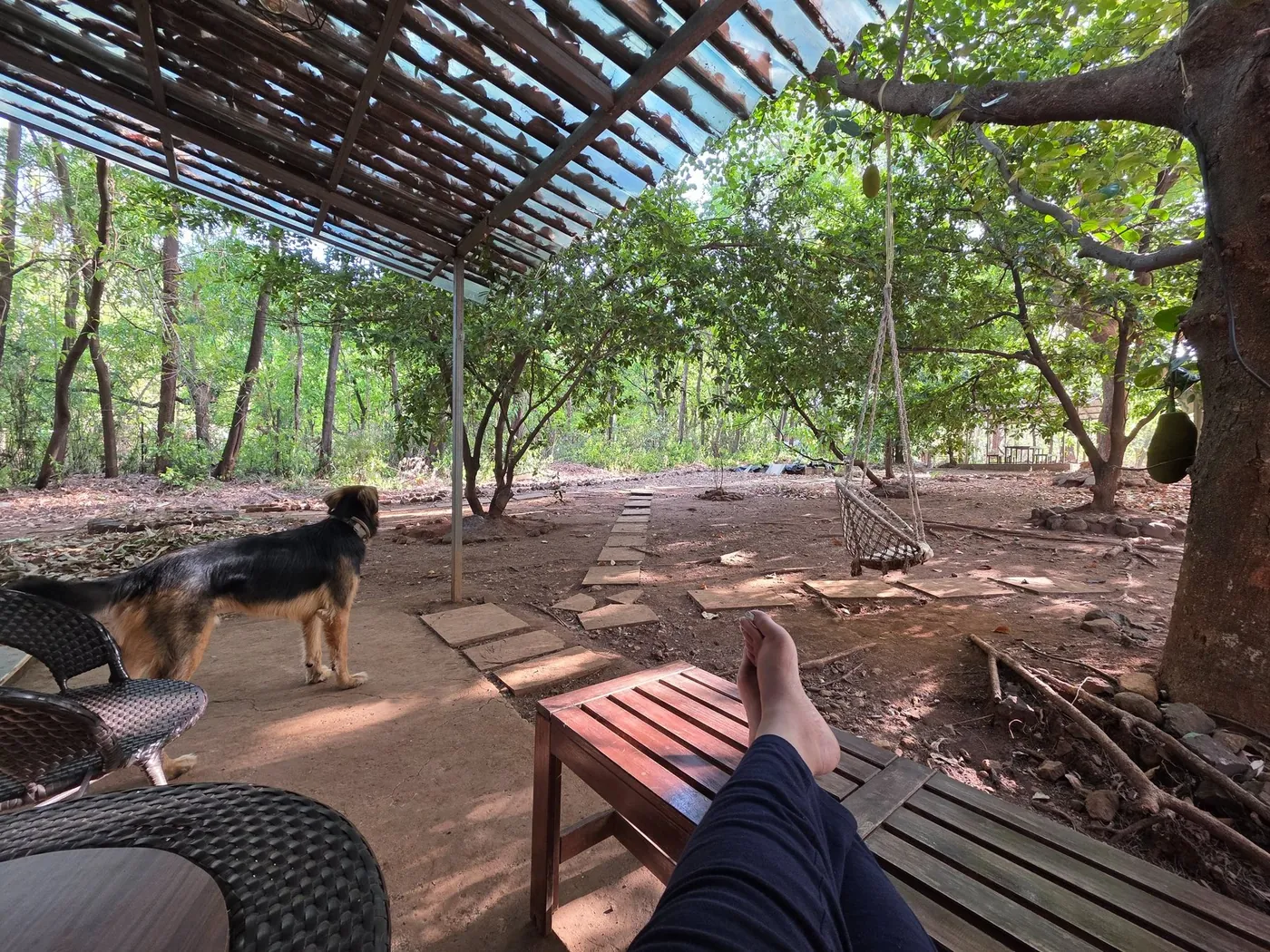
A pet-friendly stay is not always pet-ready.

This is the sentence Dog Friendly India will probably be repeating for the next decade, because the market really needs to hear it.

A listing can say “pets allowed” and still have an open gate onto a road. A resort can welcome dogs and still have staff who freeze when a German Shepherd walks past. A villa can charge a pet fee and still have no idea where your dog is supposed to pee, sleep, walk, or stay during meals.

That gap is where dog parents get stuck.

You are not being fussy when you ask questions before booking. You are doing the job the listing should have done for you.

“Pets allowed” is not the same as “prepared for dogs”

“Pet-friendly” often means one thing: the property will not reject you for bringing a dog.

That is a start. It is not enough.

Dog parents need more than permission. They need clarity.

They need to know:

  • Will my dog be safe here?
  • Will the staff know how to behave around dogs?
  • Are there rules I should know before I arrive?
  • Is there a secure area?
  • Are there strays nearby?
  • What happens if my dog gets sick?
  • Will I be treated like a guest or like a problem with a leash?

Most bad stays do not begin with bad intentions. They begin with vague language.

“Pets allowed.”

“Pet-friendly.”

“Dogs welcome.”

“Only small pets.”

“Depends on breed.”

“Extra charges applicable.”

The words sound simple until you reach the gate after a five-hour drive and discover that they mean something completely different to the owner, the manager, the caretaker, and the person who took your booking.

What pet-friendly usually means

In India, “pet-friendly” can mean any of these:

  • Dogs are allowed in some rooms.
  • Only small dogs are accepted.
  • Dogs are allowed but not in common areas.
  • Dogs are allowed but not on the lawn.
  • Dogs are allowed but staff are uncomfortable.
  • Dogs are allowed if other guests do not object.
  • Dogs are allowed but there are resident dogs on the property.
  • Dogs are allowed but there are no written rules.
  • Dogs are allowed but the fee is disclosed only at check-in.
  • Dogs are allowed because no one has thought through what happens next.

This is why dog parents keep calling, confirming, reconfirming, screenshotting chats, and asking WhatsApp groups for “real reviews.”

They are not overthinking. They are compensating for an underprepared system.

What pet-ready should mean

A pet-ready property has thought beyond permission.

It understands that hosting dogs affects safety, staff behaviour, guest communication, housekeeping, outdoor movement, emergency planning, and the experience of non-pet guests too.

A pet-ready stay does not have to be fancy.

A simple homestay with clear rules, safe boundaries, calm staff, honest communication, and a known nearest vet may be more dog-ready than a luxury resort with pretty lawns and vague answers.

Pet-ready means the property has considered the dog, the parent, and the property together.

Dog. Parent. Property.

Not one in isolation.

The questions dog parents should ask before booking

You do not need to interrogate the property like you are conducting a CBI raid. But you do need clear answers.

Here are the questions worth asking before you pay.

Is the pet policy written and specific?

Ask:

“Can you please share your pet policy before I book?”

A useful policy should tell you:

  • What types of pets are allowed
  • Whether all dog sizes are allowed
  • Whether there are breed restrictions
  • How many dogs are allowed per room
  • Which areas dogs can access
  • Whether dogs can be left alone in the room
  • Whether there is an additional fee or deposit
  • What the property expects from the dog parent

If the answer is, “Haan haan allowed hai, you come,” keep asking.

Warmth is lovely. Clarity is safer.

Are size, breed, and number limits clear?

Many dog parents discover restrictions too late.

The listing says pet-friendly. The phone call says “only small dogs.” The manager says “no German Shepherds.” The caretaker says “dog ko parking mein rakho.”

Not ideal. Also, deeply annoying.

Ask directly:

  • Is my dog’s size allowed?
  • Is my dog’s breed or mix allowed?
  • Are there any restrictions I should know before booking?
  • Are the same rules written on your booking platform?

Honest limits are not automatically bad.

A property that clearly says “dogs under 20 kg only” is more trustworthy than a property that says yes to everyone and panics on arrival.

Is the property boundary safe?

This is one of the biggest checks.

Ask:

  • Is the property fully fenced or walled?
  • Are there any open gates or gaps?
  • Is the parking area enclosed?
  • Is there direct access to a road, field, river, valley, or village lane?
  • Can dogs be off leash anywhere, or should they stay leashed at all times?

Do not assume that “private villa” means secure.

Do not assume that “farm stay” means freedom.

Open land may look beautiful in photos. For a dog with poor recall, prey drive, fear, or excitement around animals, it can become a serious risk.

Are there strays, cattle, or other animals nearby?

This is not about being anti-stray or anti-rural. DFI is not doing city-dog drama here.

It is about planning.

Ask:

  • Are there resident dogs on the property?
  • Are there stray dogs near the gate or road?
  • Are there cattle, goats, poultry, cats, or horses on site?
  • Are monkeys common in the area?
  • Does the property have a way to manage animal encounters?

For some dogs, other animals are exciting. For others, they are terrifying. For some, they trigger chasing or defensive behaviour.

You need to know before arrival, not after your dog spots goats at breakfast.

How comfortable is the staff with dogs?

This is the question most people forget.

A property owner may love dogs. The caretaker may not. Housekeeping may be scared. The kitchen staff may not know whether to approach, avoid, feed, touch, or shoo your dog.

Ask:

  • Are your staff comfortable around dogs?
  • Will staff enter the room for cleaning if the dog is inside?
  • Do staff know not to touch or feed the dog without asking?
  • Who should I speak to if there is an issue during the stay?

Staff comfort matters because your dog will read it.

A nervous staff member can make a nervous dog worse. An overfriendly staff member can overwhelm a shy dog. A person who tries to grab, shout, or chase can turn a manageable moment into a bad one.

Where will your dog eat, sleep, walk, and relieve themselves?

Ask practical questions.

  • Can the dog sleep inside the room?
  • Is there space for the dog’s bed or mat?
  • Is the flooring dog-friendly?
  • Is there a designated walking or relief area?
  • Are poop bags or bins available?
  • Can the dog accompany us during meals?
  • If not, what is the alternative?

This is where “pet-friendly” becomes real.

A dog is not luggage. You cannot simply “keep it somewhere.”

What happens in an emergency?

Ask:

  • Where is the nearest vet?
  • How far is it by road?
  • Is there an emergency or after-hours option?
  • Does the property have a local vet contact?
  • Is mobile network reliable?

This does not mean every stay must be five minutes from a 24-hour hospital. Many beautiful rural stays will not be.

But you should know the risk and plan accordingly.

The worst time to Google “vet near me” is when your dog is already unwell and the network has one bar.

Red flags to notice before you pay

Be careful if you hear:

  • “Pets allowed, but only after booking.”
  • “Depends on the dog.”
  • “No issue, but other guests should not complain.”
  • “Large dogs are okay, but keep him outside.”
  • “Staff will manage.”
  • “There are strays but they are friendly.”
  • “There is no boundary, but dogs usually don’t run.”
  • “Extra charges we will tell at check-in.”
  • “No need to discuss, just come.”
  • “Your dog is trained, right?”

Some of these may come from ignorance, not malice. Still, ignorance can be expensive when your dog is the one at risk.

Green flags that suggest a stay may be more dog-ready

Look for properties that:

  • Share a clear pet policy before booking.
  • Ask about your dog’s size, temperament, and needs.
  • Tell you honestly where dogs are and are not allowed.
  • Explain the pet fee upfront.
  • Know whether the boundary is secure.
  • Mention resident dogs, strays, cattle, or wildlife clearly.
  • Have staff who understand basic dog boundaries.
  • Can tell you the nearest vet and distance.
  • Have a practical check-in process for dog guests.
  • Are willing to say, “This may not be suitable for your dog.”

That last one is underrated.

A property that can say no honestly is often safer than a property that says yes to everything.

Why this matters even more for large dogs, reactive dogs, senior dogs, and first-time travellers

The same property can be fine for one dog and unsuitable for another.

A small senior dog who sleeps most of the day may need quiet flooring, easy access, shade, and minimal stairs.

A young Labrador may need boundary safety, water access, and management around food and people.

A reactive Indie may need distance from other dogs, low footfall, and staff who do not approach.

A German Shepherd mix may trigger fear in staff even if the dog is trained.

A first-time traveller may need more predictability than a dog who has already stayed in ten different places.

This is why DFI does not treat “pet-friendly” as a single label.

The real question is: ready for which dog, which parent, and which kind of stay?

For properties: dog-ready is an operating system, not a listing filter

If you run a homestay, villa, farm stay, heritage property, or small resort, adding “pets allowed” to your listing is not enough.

Dog parents are not just buying a room. They are buying confidence.

They want to know you have thought through:

  • Safety
  • Staff behaviour
  • Clear rules
  • Cleaning
  • Other guests
  • Emergency access
  • Property-specific risks
  • Communication before arrival

This is where many good properties lose bookings. Not because they are unsafe. Because they cannot prove they are prepared.

DFI helps properties move from vague pet-friendly claims to clearer dog-ready systems, communication, and guest trust.

Get the DFI pre-booking stay checklist

Before you book your next stay with your dog, ask better questions.

Not more questions for the sake of being difficult. Better questions that tell you whether the stay is genuinely prepared.

Message CHECKLIST to Dog Friendly India and we’ll send you the pre-booking stay checklist for dog parents.

And if you are a property owner who wants your stay to be more dog-ready, talk to DFI.

Ask better questions before you book.

Message DFI for the pre-booking stay checklist, or reach out as a property owner if you want to make your stay more dog-ready.

Message DFI on WhatsApp

Frequently asked questions

What is the difference between pet-friendly and pet-ready?

Pet-friendly usually means a property allows pets. Pet-ready means the property has thought through safety, staff behaviour, rules, cleaning, dog movement, and emergency planning.

Are pet-friendly hotels in India safe for dogs?

Some are. Some are not. The label alone is not enough. Dog parents should check the property’s boundaries, pet policy, staff comfort, other animals nearby, fee transparency, and vet access before booking.

What should I ask before booking a dog-friendly stay?

Ask about the written pet policy, size or breed limits, pet fees, secure boundaries, resident or stray animals, staff comfort with dogs, allowed areas, relief areas, and nearest vet access.

Is a fenced property necessary for travelling with dogs?

Not always, but it matters. If your dog has poor recall, high prey drive, fear, reactivity, or excitement around animals, an unfenced property can be risky. Leash management becomes essential.

Can DFI verify if a property is dog-ready?

DFI’s property readiness work is being built around trained-eye, on-site assessment with real dog-travel conditions. Property owners can contact DFI to discuss readiness consulting.