
Your dog pauses at the door, looks away when a visitor bends over, or suddenly stops taking food on a busy walk. It is tempting to ask for a sit and move on. But the more helpful first question is: what changed for my dog?
Dog communication is more than barking or wagging
Dogs use movement, body posture, facial expressions, sounds and distance to respond to the world. A wagging tail does not automatically mean a dog wants contact. A quiet dog is not automatically comfortable. Look at several signals together and compare them with how your dog normally behaves.
Five everyday signs worth noticing
1. Turning away or moving away
Your dog may turn their head, curve away or step back when a person or another dog approaches. Respect the space they are asking for rather than insisting on a greeting.
2. A change in body tension
A loose body can become still, stiff or low. Watch the whole dog, not just the tail. Freezing can matter even when there is no growl or bark.
3. Lip licking, yawning or repeated blinking
These can sometimes appear when a dog is uneasy, particularly alongside other changes. They can also happen for ordinary reasons. Context matters more than an isolated gesture.
4. Difficulty responding to familiar cues
When your dog stops checking in or struggles with something easy at home, the setting may be too difficult at that moment. Increase distance, reduce distractions or end the activity early.
5. Recovery after something surprising
Notice whether your dog can return to exploring, sniffing or engaging after a noise or unfamiliar encounter. Recovery gives useful information when deciding what to practise next.
What better communication looks like in everyday life
Understanding your dog does not mean interpreting every movement perfectly. It means observing, making a reasonable adjustment and noticing the result.
- At home: offer a resting place away from visitors and let your dog choose whether to approach.
- On walks: create more space from a trigger instead of repeatedly asking for attention at close range.
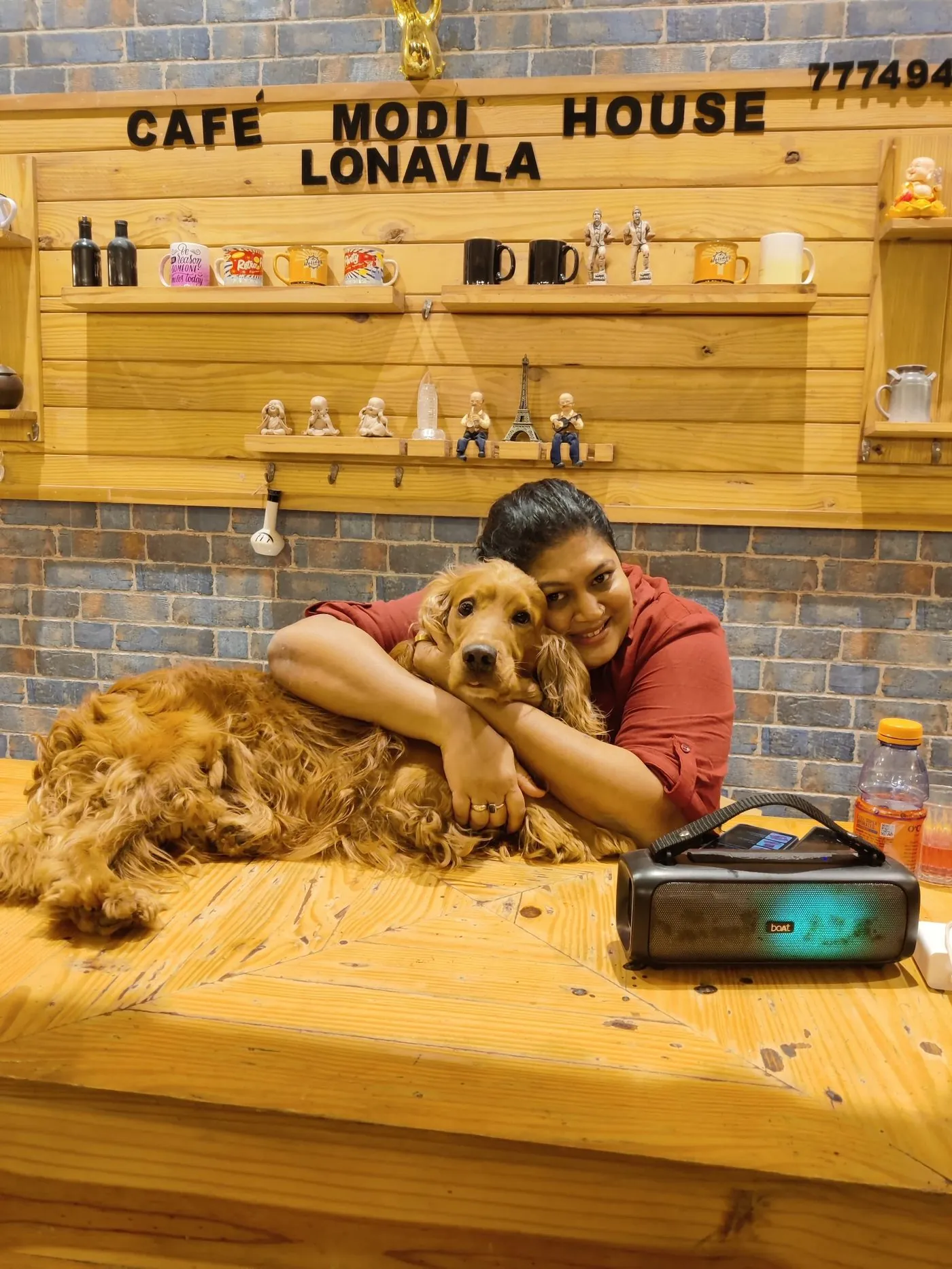
- In cafés: start with short, quiet visits and notice whether your dog can settle, not only whether they obey.
- In the car: observe your dog before, during and after travel, including signs of discomfort or difficulty recovering.
A simple observation exercise for dog parents
For three ordinary moments this week, note: (1) what happened just before your dog reacted, (2) what their body did, (3) what you changed and (4) whether they became more comfortable. Keep your notes descriptive rather than guessing a motive. This can reveal useful patterns to discuss during training.
Why this changes how we train
Training works better when the parent knows when to ask, when to make the environment easier and when to stop. Practising a familiar cue is useful, but communication also includes listening to the dog’s response. This is part of DFI’s parent-and-dog approach to everyday life and outings.
For help with routines and everyday foundations, explore The Open Door. If you want to understand what your particular dog needs first, read about the Readiness Check. For examples outside home, see why dogs may struggle to settle outside.
When to seek additional help
Sudden behaviour changes, suspected pain, severe fear, aggression or a risk of injury deserve individual assessment. Contact a veterinarian for possible medical causes and an appropriately qualified professional for concerns beyond ordinary training. Do not force exposure or punish warning signals.
Common questions
Does a wagging tail always mean happiness?
No. Look at the dog's overall body, speed of movement, surrounding situation and willingness to approach or move away.
Why does my dog ignore me outside?
Outside may bring more smells, movement, sound and uncertainty than home. Practise at an easier level and build up gradually rather than assuming disobedience.
Can dog parents improve communication without using more commands?
Yes. Observing body language, offering choice, managing distance and rewarding useful behaviour all contribute to clearer communication.
Further reading
RSPCA: How do I communicate with my dog? and American Veterinary Society of Animal Behavior: Humane training guidance.
By Mugdha Yelkar, founder and trainer at Dog Friendly India. Published 24 October 2026.